Showing posts with label student success. Show all posts

Monday, March 28, 2022

Active Concept Maps Help Students Make Connections


We all know that concept maps help students learn anatomy and physiology in at least two ways.

One way is when we use concept maps to teach principles in a visual manner that clearly shows relationships among several ideas. Students thus clearly see how to organize their thoughts about connected ideas as they construct their own conceptual frameworks as they learn.

Another way concept maps help students learn is when they build their own concept maps from what they already know about anatomy and physiology. Concept-map-making can thus be a powerful study tool. However, students without prior experience with concept maps often have a difficult time getting started. A few good examples of concept maps that relate to the ideas they are learning in your course are all they need to get a good start in making their own.

Starting with this edition of Patton Anatomy & Physiology we are providing Active Concept Maps in the Student Resources in Evolve

Each Active Concept Map is an animated video of a concept map presented in a similar style to the concept maps used throughout the text of Patton Anatomy & Physiology. However, these concept maps are "active" in the sense that they build from a single block as the narrator walks the viewer through each related concept that appears as the concept map branches and grows.

The block-by-block guided walk-through of a major concept will help students understand what they have read and heard in class more deeply. It will also model for students how they can build their own concept maps for other sets of related ideas that they encounter in your course.

Perhaps most importantly, the Active Concept Maps will provide a template for how to think in a "connected" way about the major concepts of the anatomy and physiology course. For many of our challenged students, this is an especially important skill they must develop to succeed.

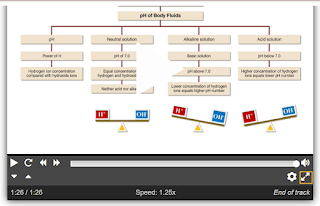
Here's a brief video walk-through that shows where to find Active Concept Maps in Evolve and how they work:
active concept map still image


Thursday, March 10, 2022

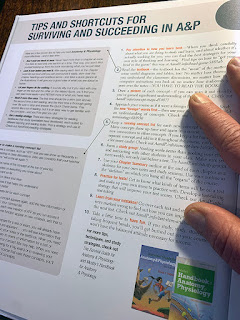
Tips and Shortcuts for Surviving and Succeeding in A&P

A feature of Patton Anatomy & Physiology that is often overlooked by faculty, but loved by beginning anatomy and physiology students is called 

Tips and Shortcuts for Surviving and Succeeding in A&P.

As soon as an A&P student unwraps and opens their new textbook, they flip over that endpaper and find this one-page guide on how to get started on the path to success. That one page is loaded with great study tips and how-to-read-a-textbook guidance organized in an intuitive, graphic manner. 

From metacognition to tackling new terminology to retrieval practice, this guide uses simple language to quickly outline the key strategies needed to succeed in A&P.

This guide also give faculty a place to quickly send students asking for study advice. And it gives faculty a place to find quick and easy tips for them to share in class or in a syllabus or course website.

Embedded throughout each chapter are brief Hints that remind students to use these strategies just at the moment they need them. Read more about these Hints at Embedded Hints Improve Reading Comprehension.

Patton Anatomy & Physiology is a textbook that is truly focused on helping students succeed!


Tuesday, June 29, 2021

Diverse Representation in Anatomy & Physiology

From the earliest days of my involvement with the Anatomy & Physiology textbook, I've strived to ensure that the representation of people in the illustration program, the chapter narratives, the examples and cases presented, reflects the diversity of humanity. 

My publisher has fully supported my (rather expensive) requests for creating new artwork and shooting new photographs. They have also supported my chapter revisions and have helped me find and revise passages that need improvement.


Why is this important? 

Our students—my readers and users of the textbook—must see themselves and their lived experiences reflected in this textbook and other learning materials. If they cannot, then it's difficult for them to see themselves fully accepted as part of the humanity that we explore in the anatomy and physiology course. This perceived lack of acceptance is a very real barrier to learning. When they cannot easily see themselves as part of the world of A&P, then it's also a barrier for students as they pursue their career path. 

Diverse representation in Anatomy & Physiology is also important because students must develop an understanding, acceptance, and appreciation of the normal variation and diversity among the human population if they are to be successful as healthcare and athletic professionals. 

The seventh edition of Anatomy & Physiology marked the moment when diverse and inclusive representation became a goal of every revision cycle. In the tenth edition, we were able to significantly diversify our photo collection and anatomical illustrations. 

For example, in the tenth edition, we were among the first to use Black female subjects for the key illustrations of human musculature—overturning centuries of white males serving that role.


Diversity and inclusion has been a primary goal of the upcoming eleventh edition of Anatomy & Physiology, as well. As we review our page proofs and make our final tweaks, we continue our strong effort to make our textbook one of the most inclusive science textbooks on the market.

However, as much as we have made admirable progress and maintained our lead in this area, we still have a long way to go. It's a daunting task. And the path is not always clear. The resources are not always available. Our awareness is still expanding. Nonetheless, I think you'll be pleased with the new edition when it is published later this year. 

And I hope you'll join us in pointing out where we've made good progress and where we still need to improve. We're in this together.

Monday, June 22, 2020

Pandemic Scramble: Keeping It Simple

In my opinion, the big mistake that professors commonly make when moving an on-campus course to remote teaching is to make things more complicated than they need to be. That unnecessary complexity stems from the idea that one must take their entire course, including every element and detail, and move it more or less "as is" to an online environment. I think we get much better outcomes if we strive to keep it simple.

First, "remote" need not always be "online." There are a lot of learning opportunities to be had with reading and retrieval practice assignments from the Patton Anatomy & Physiology textbook. Students have invested a lot in acquiring this resource and a large team has worked together to make it an effective learning tool. Now's a great time to do better by our students by helping them engage fully in both reading and raiding their textbook. 

Second, now is a great time to revisit our learning outcomes and compare those to our course design. Most of us keep adding more expected outcomes, and therefore more content, to our courses over the years. As we consider various learning activities, we often add them rather than replace existing activities. Our course becomes bloated, complex, and heavier than it needs to be. So my advice is to prune, prune, prune to the main outcomes—the truly essential concepts—of our A&P course. Then, and only then, are we ready to move to remote teaching.

Third, rather than simply digitize our course components—recording lectures, converting tests and quizzes to online formats, etc.—we should rethink our course design. I suggest trimming back on what we are telling and showing showing students and rely more on their own discovery. And resisting the urge to use every last one of the cool toys that our instructional designers are helping us to discover.

What I mean by that is focusing our recorded lectures on the hard-to-understand "pain points" of A&P. And even then, we should consider trimming our narrative down to half or less of that 50-minute time block that we are used to. Then taking those shorter lectures and chunking them into even smaller, bite-sized pieces.

We can also substitute those occasional, mind-bending summative tests with frequent, low-stakes formative tests by using the our learning management system's online quizzing engine. This leverages the learning benefits of retrieval practice by shifting the work of learning to the student—where it belongs. This approach also makes light work of learning, thus avoiding a burdensome load during this time of stress and uncertainty.

To learn more about these suggestions and more, watch my video presentation Simple Ideas for Moving to Remote Learning or listen to an audio version from my podcast.


Monday, March 16, 2020

Pandemic Scramble: Adapting to Remote Learning, Suddenly

Well, friends, I'll bet most of us didn't see this pandemic coming. Not to the extent of impact it's had on the teaching and learning of anatomy and physiology. But it's here and we're going to roll with the punches and deliver a positive and productive learning experience for our students, right?

To help us all get ourselves organized and on the right track as we adapt to suddenly having to move our face-to-face course homes to a remote venue out there in the vast expanse of space, I've assembled a few "get started" resources to help you adapt.

Quickly Moving to Remote Delivery—The Musical

This is an "emergency" bonus episode of my podcast (The A&P Professor). The brief audio presentation presents nineteen tips on how to get started. And there are three A&P songs from my friend and fellow A&P teacher, Greg Crowther. For a sing-along! We could all use a light-hearted sing-along about sodium ions right now, am I right?

Go to theAPprofessor.org/64b for an audio player plus a lot of links and other resources. Or subscribe in your favorite podcast player and look for Episode 64b.

There is also an earlier episode called Mid-Winter Winterizing of Our Courses meant to help prepare us before this all flooded in upon us. Many of these prep tips are still useful, even as the metaphorical flood waters continue to rise all around us. Go to theAPprofessor.org/63b

TEACH Instructor Resources for Anatomy & Physiology

This little gem has been there all along! Really. In your Evolve (Instructor) Resources for Anatomy & Physiology 10th Edition.  TEACH has all kinds of tips and strategies that can be used to generate ideas for learning activities that can be adapted for remote teaching.

Included in TEACH are:
  • Lesson Plans
  • Student Handouts
  • PowerPoint Slides
  • Pretest Questions and Pretest Answers


If you don't have an Evolve account, then just go to evolve.elsevier.com and click on Sign In in the upper right, then click on Create Account near the bottom of the form that pops up. Make sure you apply for a faculty account. It will take a day or so to verify your faculty status. In the search box on the home page, or when you click Catalog at the top, type in Evolve Resources for Anatomy & Physiology 10th Edition, then request access. The TEACH resources will be listed in the Instructor Resources tab.

But wait! There's more...

Teaching Tips

Also found in your  Evolve (Instructor) Resources for Anatomy & Physiology 10th Edition, a separate sheet of advice—simply called Teaching Tips—supplements the TEACH resources to spark ideas for your transition to remote teaching.  

Besides the TEACH resources and Teaching Tips, there are all kinds of other resources in your  Evolve (Instructor) Resources for Anatomy & Physiology 10th Edition:

  • Audience Response Questions—meant for "clicker" systems in a classroom, they can be easily adapted for online presentations to spark student thinking during an online "lecture" or demonstration.
  • Image Collection—contains (labeled and unlabeled) jpeg and PowerPoint versions of each image from the textbook.
  • Test Bank—can be a great resource for quickly constructing online quizzes and reviews. Consider using them for Testing-as-Teaching, a type of retrieval practice mentioned later in this post.

The A&P Professor

I already mentioned The A&P Professor podcast, but there is lot more there for you than those "emergency" bonus episodes. It's worth exploring the whole list for practical tips and advice as you move to remote teaching. The great thing about podcast episodes is that you can listen to them while you are wiping down the surfaces in your home, making your family's meals, and rearranging your stacks of toilet paper. Here are a few selected topics to start with:


Besides the podcast, The A&P Professor website includes other resources, such as online seminars for teaching anatomy and physiology. Here are a couple that may be helpful as this time:

Free eText

VitalSource and Elsevier have partnered to provide eText access to students. To assist students at disrupted semester-calendar schools who are losing access to course materials due to COVID-19 campus closures, VitalSource has been joined by Elsevier to offer free access to etexts to students whose classes have moved online from March 16 through May 25, 2020. Students will be able to access the expansive catalog of eTexts from participating publishers through the VitalSource Bookshelf app effective immediately.


Besides this being useful to students who are "stuck without" their textbooks, it can offer additional opportunities to connect with students in a remote environment. 

For example, something that I do in an online course I teach is let my students "subscribe" to the highlights and notes in my own copy of the eText version of the textbook. 

I can mark areas of particular importance, add commentary on what they should be looking at in a section or illustration, and clarify concepts that commonly challenge student learning. This could be particularly useful in "holding the hand" of a confused and dazed student who is trying to adapt to a new learning environment.

Coloring Book

I've been seeing a lot of advice to folks in general, telling them to sit around as a family and color in their coloring books. That makes a lot of sense in terms of diffusing stress and connecting in a positive way with those with whom we are house-bound. 

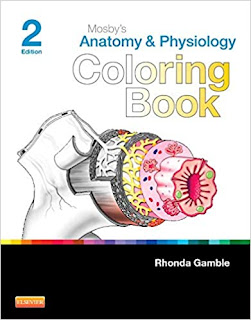
Why not suggest to students to do that, but use Mosby's Anatomy & Physiology Coloring Book as one of their coloring books? 

In a post from my blog The A&P Student, I recommend coloring as a way to study anatomy and physiology in a new and fun way—that also calms the nerves. So their nerves will become calm as they study their nerves! Check out Coloring Books Are Powerful Study Tools (And They Help Manage Stress).


Okay, whew! That's enough for now, eh? Don't hesitate to reach out if I can be of help to you. 


Thursday, September 20, 2018

The New Adaptive Quizzing Tool Is Available!

Did you know that there's a new version of  Elsevier Adaptive Quizzing (EAQ) now available for Anatomy & Physiology 10th edition?

I've mentioned the value of EAQ in the past, but this version has been updated and enhanced to be an even more valuable learning and teaching tool! 
  • Have you ever wished that you could tell where your students are struggling with content by just glancing at a dashboard?

  • Wouldn’t it be amazing if your students were being quizzed on material they’re struggling with versus material they’ve already mastered?


How would you like to create a quiz or a test that adapts to your student’s needs, in just 3 easy steps?

Check out this 1 minute video below to show you how!


My friend Ashley Nagel over at Elsevier Publishing is hosting a 30-minute live demo on EAQ for Anatomy & Physiology 10th edition on Thursday, October 4th at 1:00 PM CST.

If you would like to attend, simply register by clicking or copying/pasting this link:

https://elsevier.zoom.us/meeting/register/0e4dc230bd47f4498c34be5db4a05ad8 

If you attend, Ashley will send you a fantastic gift that’s fit for an A&P Instructor!

If you’re unable to make it to this demo, but would like to set up a private demo at a time that better works for your schedule, still register for this meeting and then shoot Ashley an email at a.nagel@elsevier.com . She’ll be happy to set up a time with you!


Tuesday, March 6, 2018

New Unit Pre-Tests Help Jump-Start Student Learning

A particularly exciting update in the new edition of Anatomy & Physiology is the new learning feature in the opening of each unit of the book.

Recall that A&P is chunked into more, smaller chapters than other 2-semester A&P textbooks to reduce a reader's cognitive load while learning. This improves both the reader's engagement with the book, making them more likely to actually read it, and the overall ability to learn from it. These small chapters are grouped into six logical units, mapped out in the color-coded list on the first page of the book (facing the cover) that corresponds to the color tabs visible on the page edges.

In previous editions, the unit-opener page had a listing of the chapters within that unit plus a brief introduction to the "story" of the unit. I have now expanded that into a two-page spread that also includes a brief pre-test to get students engaged in the upcoming topics.

Learning science shows that pre-tests help jump-start student learning. Long used solely to measure students' prior knowledge, pre-tests have demonstrated their own ability to enhance learning outcomes—even if teachers never look at the scores. I have found this to be profoundly true in my own A&P teaching.

The concept and design of our new unit openers was worked out by textbook learning guru Michael Greer, veteran A&P teacher Terry Thompson, and myself. Terry then worked in consultation with me and our editors and book designers to execute the final versions.

Students will see just a few illustrated questions that help students refresh learning from prior chapters that they'll need when reading the new unit, along with questions that preview new concepts they'll encounter. Such pre-testing "primes the pump" by getting them thinking about key concepts ahead of their reading. And it sets the stage for connecting new learning with prior learning.

Readers get immediate feedback on the accuracy of their answers by using the answer key printed sideways along the page edge.  Just like in a magazine quiz, eh? That ensures that they're not accidentally remembering the wrong answer as they read.

Readers also get an embedded hint that tells them why the pre-test is there (to jump-start their learning).

Of course, our students may just skip the unit openers. So we need to tell them about it. Continued and emphatic reminders of the value of these pre-tests in making their reading and learning easier is a key to its role in student success in our course.


Tuesday, May 23, 2017

Where Are the Learning Objectives?!

From the very first edition, there have never been chapter objectives in Anatomy & Physiology. Why is that?

Let me start by asking the question How likely is it that every single course using a particular textbook would have the SAME objectives? Not likely. The makeup of the student population in a course matters. The context of the institution and its programs matters. All kinds of factors are involved in setting a proper set of learning objectives or outcomes for any particular course.

We feel that it's much better for the objectives to appear in the course syllabus (or similar course-based location). That way, they exactly reflect what the student should achieve. This results in far less confusion for students trying to reconcile all the many concepts and facts in the book vs. what they will actually be held accountable for learning. Students will have a much better idea of how to prepare for tests.

But the instructors are not left to fend for themselves completely. In the TEACH lesson plans—available online in the Evolve Instructor Resources that accompany Anatomy & Physiology—there are sets of objectives already laid out for you. These include chapter objectives and also section objectives—all aligned with the HAPS Learning Outcomes.

The idea is that each instructor (or department) can copy over to their syllabus only the objectives that actually apply to their course. Perhaps adding, changing, deleting bits here and there. We feel that this works much better for student learning. But it does take some thought and effort on the part of the instructor.

This isn't one of the reasons we don't include chapter objectives in Anatomy & Physiology, but think about this—how many times have we all realized of how "stinking big" all the two-semester A&P books are? So I'm loathe to add (how many?) pages to the book by adding 48 sets of objectives!

Monday, September 28, 2015

Chunking Content Provides Flexibility

In some of my previous posts, I explained some of the advantages of chunking a large volume of complex content into smaller bits:

Chunking breaks content into smaller bits
Those previous discussions described chunking material into smaller chapters, smaller sections, smaller subsections, smaller paragraphs, and smaller sentences. I also described chunking material in Anatomy & Physiology in the form of summary tables that also help students discover conceptual patterns.

This post builds on these ideas by introducing the value of breaking textbook content into smaller chunks when adapting the textbook content to the specific needs of your A&P course.

In an article I wrote last year at The A&P Professor titled Your Textbook is a Mitten, Not a Glove, I called attention to the fact that each of us tailors the depth and range of topics, the style of presentation, and sometimes the sequence of concepts, to fit the specific objectives of a course—or even a particular section of the A&P course. I believe that a thoughtfully chunked textbook assists both instructors and students in making the textbook "fit" the course.

Flexibility in selecting and organizing content for your course is enhanced by having the Anatomy & Physiology textbook broken down into smaller units. For example, by having the entire course broken down into 48 chapters—instead of the usual 20-something chapters—the instructor can "move around" content into a different sequence from the Anatomy & Physiology textbook's sequence with very little disruption to the students. Reducing disruption by being able to move whole chapters—rather than a half or third of a chapter here and there--can greatly enhance the student experience. It also makes it easier for the instructor, who is thus relieved from unraveling the confusion in syllabi, course schedules, and student inquiries.

Smaller, more discrete chapter topics also makes it easier to skip a topic. For example, in some programs, most topics in immunity are not covered in the A&P course, but are instead covered in microbiology or another course. Most A&P books combine lymphatic and immunity topics into a single chapter, so an A&P professor may find themselves wrestling with the student confusion caused by assigning only a partial chapter.

And "good luck" if your students are using a published workbook or online adaptive learning tool that is organized by chapter.

In Anatomy & Physiology, however, separate chapters on lymphatics, innate immunity, and adaptive immunity make it very easy to reorganize—or even skip—topics to suit the needs of a particular A&P course.

Students benefit from clear organization
Likewise, carefully subdivided sections and subsections assist instructors in skipping or rearranging the sequence of topics within a particular chapter. Even if the instructor does not call attention to a rearrangement of certain elements of the A&P story in class (vs. the sequence in the textbook), the clear labeling of discrete sections and subsections helps the student figure out where the concepts are covered in the textbook.

Chunking has many benefits—and we can now see that enhancing the instructor's flexibility in organizing course content is one of them. And that can result in less student confusion—and greater student success.


Images: Robert Michie (top)
KPatton (middle)


Wednesday, May 13, 2015

Embedded Hints Improve Reading Comprehension

Can we assume that our students come to us already knowing how to read a book? Probably. 

Can we assume that they know how to effectively read and use an A&P textbook? Probably not.

Really? you may wonder. What's special about reading a textbook?

Technically detailed textbooks such as A&P textbooks are not much like books of popular literature. One cannot just sit down and read a chapter of an A&P textbook from start to finish—like you would with a novel—and expect to have learned much. And whatever you did comprehend would probably disappear from your brain by day's end.

No, college reading experts tell us that students must use reading strategies to comprehend what they read in a textbook. But I see that my students come to me without any such strategies or skills. They've gotten by without them until they hit their A&P textbook, then wonder why the textbook doesn't seem to be helping them much. Then they limp along on class notes only—missing out on the deeper learning possible with the complementary material in the textbook.

I was an excellent reader when I was an undergraduate. Looking back, however, I realize that I didn't use any special strategies—and I didn't really get a whole lot out of my hours of textbook reading. Not compared to what happens now when I do technical reading employing some of the proven strategies to increase my reading comprehension of technical scientific works.

So what to do? Spend a week teaching our students how to read their textbooks? After getting some training ourselves in college reading strategies?

I've provided a better option in Anatomy & Physiology.

To guide students step by step through an effective reading strategy, I've embedded a series of hints that tell students exactly what to do to learn from their textbooks more effectively—and by spending less total study time.

Some of these strategies I've discussed here in previous posts. For example, I've already walked you through the word-study approach to reading vocabulary and The Big Picture summary of interrelationships of concepts.

Take a look at any chapter in Anatomy & Physiology to see the embedded hints clearly marked with the Hint icon. If you don't have a copy, just go to this link and request a free review copy now!

Then let's help our students by advising them follow the directions in the hints to get the most out of their A&P textbooks—and reduce their total study time!

Wednesday, May 6, 2015

Case Studies Promote Critical Thinking Skills

The use of case studies in teaching is probably as old as teaching itself. What better way to solidify the learning of basic concepts than to practice applying them to hypothetical "real life" scenarios?

The teaching and learning of human anatomy and physiology lends itself particularly well to case study applications. Most of our learners are preparing for health professions or fitness-athletic careers in which they'll be doing nothing but applying A&P principles to real-life cases.

That's why every chapter in Anatomy & Physiology includes a brief, engaging Case Study scenario that challenges the reader to apply what they've learned in that chapter. It appears with the end-of-chapter review material, as part of a suite of active learning opportunities that help readers really "get" the core concepts of human structure and function.

Brain -based learning principles hold that students learn better when they are challenged with activities that allow them to construct and consolidate their own mental models of basic concepts. Puzzling over a case study after reading a chapter helps students do just that.

I've found that many of my A&P students rely heavily on inductive reasoning and therefore may find that case studies make it easier to understand core concepts. The chapter narrative uses a deductive approach, moving from general principles to specific concepts—then the case study turns things around a bit and allows the reader to explore specific cases to construct a mental framework of the broader principles. They thus learn their A&P "backward and forward," eh?

Study after study has shown that the case-study strategy is an effective learning tool for A&P students, so why not incorporate that into their reading process?

Take a look at the Case Studies in your copy of Anatomy & Physiology to see that it really does fit the needs of your students to improve reading comprehension. If you don't have a copy, just go to this link and request a free review copy now!

X-ray credit: Hellerhoff

Wednesday, April 29, 2015

Pharmacology Answers "Why Do I Need to Know All This?"

Is there any A&P professor who doesn't often hear some version of "why do we need to know all this?" in a tone that implies that we are surely asking way too much of our students. Of course, some of that is a natural reaction to a challenge. But some of it is rooted in the idea that health professionals can somehow understand clinical concepts without much of a foundation in basic scientific principles.

One area in particular that makes many A&P students—and even a few professors—chafe under the load is the autonomic nervous system (ANS). Why in the world would a health professional such as a nurse need to know about cholinergic and adrenergic fibers and receptors? Not to mention the fact that there are subclasses of autonomic receptors like alpha, beta, nicotinic, muscarinic, and bears—oh my! Okay, not bears. But in a student's mind, all these concepts may as well be gigantic, dangerous beasts!

The thought is "do we really need to know all that?" If I'm a nurse, will I ever have to use a detailed knowledge of ANS function, particularly all those subclasses of autonomic receptors? The short answer is, "YES!"

But students don't always trust that simple answer—because "really? Beta2-adrenergic receptors?!" 

So in the new edition of Anatomy & Physiology, I've just gone right ahead and addressed the issue head on. Which, it turns out, is much easier than a head-on encounter with a gigantic, dangerous beast.

In Chapter 22—Autonomic Nervous System, a new section titled Pharmacology follows the discussion of ANS receptors. It begins with this passage:
The interest in autonomic transmitters and receptors is not simply theoretical. Knowledge of specific transmitter-receptor locations and types, their various interaction, and how they are modulated in co-transmission, is important for understanding how many common drugs work. Pharmacology, the study of drug actions, has used such knowledge to determine how known drugs—and even traditional therapies—work in the body.
The new Pharmacology section then goes on to explain how familiarity with the general idea of receptor classes gives one a practical understanding of many of the most common types of drugs that health professionals—and patients, for that matter—encounter on a daily basis in clinical practice.

These concepts thus prepare students to make good patient-care decisions. 

Salmeterol
beta2-adrenergic agonist
used in treating
asthma and COPD
In short, this new section directly answers the question, "why do I need to know all that?" with a direct, common-sense application. By doing that, one hopes that as the student progresses, they may trust us a bit more when we challenge them with details that may not be seen as directly useful in one's clinical career.

If you have a copy of Anatomy & Physiology, flip over to Chapter 22 (p.511) and read through this section. It's not very long, but you'll be able to see how we develop the "here's why you need to know this stuff" theme a bit further with a table showing patterns of transmitter-receptor activity compared and contrasted with agonist and antagonist categories of drugs.

If you don't have a copy of Anatomy & Physiology, why not?! Just go to this link and request a free review copy now!


Photos: Produnis and Mendel

Wednesday, April 15, 2015

Tables Help Students Recognize Patterns

One of the things our Anatomy & Physiology books are known and loved for is their extensive set summary tables. Although students quickly discover how useful they are, I'm not sure many A&P professors give them much thought.  But as an A&P author, I have to give them a lot of thought—and I want to share a few of my thoughts about these tables that may surprise you!

Tables help students construct a conceptual framework.
Sometimes, beginning students are so overwhelmed with details that they have a hard time seeing how it all fits together into a whole idea. Summary tables bring details together in a way that assists learners in starting their own cognitive scaffold for new facts and ideas. Those of us who already appreciate "the big picture," often forget how critical it is for newbies to properly build their understanding in steps.

Tables serve as a handy reference tool.
Students often use their textbooks for "raiding" specific facts, rather than reading whole sections.  For example, when learning the bones and markings of the skeleton, summary tables can quickly and effectively give a pithy description of illustrated structures in the textbook. As professors, we often forget how much the beginner relies on such tools to get started in learning.

Tables help students recognize patterns.
Many of the tables in an A&P textbook are not meant to be memorized.  Instead, they are used to compare and contrast ideas in a visual way that is difficult to do in the text narrative.  This moves students beyond "just the facts" to how those facts can be applied in understanding human structure and function.  In a table, patterns become obvious and critical thinking starts to "click" in the minds of readers. We instructors, who have already had our "aha" moments with these topics, sometimes don't appreciate how helpful a carefully arranged table can be in producing such moments.


Tables must be easily readable.
This may seem too obvious a fact to mention here. However, I've found that well-prepared teachers can easily read and understand even a horribly formatted, vaguely written table. Students who are just learning the concepts often get lost as they go across a row and don't know enough to figure out where they are supposed to look next.  Which brings me to my final, and perhaps most important, point . . .

Effective tables are carefully designed.
This is what makes a table easily readable—thoughtful design. In the latest revision of Anatomy & Physiology, effective table design is a major focus.  Having experimented in previous editions, I collaborated with our designer, editors, and previous students, to find a format that is both "readable" and "raidable."  I'll list a few things we did to make that happen in a moment.  But first, I also want to mention that I also put a lot of work into making sure that content that lends itself to a summary table is put into a table in way that complements and supports the text narrative.  That is, the table content is not simply a re-hash of the text—it is a thoughtful rearrangement of concepts to add more depth to student learning.

Table design features that promote effective learning in Anatomy & Physiology:

  • Background screens
    • Different shades of color behind different rows of each table helps the brain quickly see logical groupings of concepts.  
    • The color of the screens is apparent, but not too bright or too saturated to distract the brain from the content
  • Rules (borders)
    • White horizontal rules are just visible enough that they (along with the color screens) subtly guide the reader's eye across rows
    • Vertical rules help the reader clearly distinguish columns and cells so that it is clear how the concepts are organized in the table
  • Fonts
    • Font sizing allows tables of a compact size—which allows ease of seeing patterns in the whole—but is still big enough for easy reading
    • Intentional use of boldface and italic headings within the more complex table help clarify the organization of ideas—thus reducing the cognitive load of understanding table content
    • The occasional use of color fonts helps highlight conceptual patterns
      • For example, the book's color code can be applied in tables related to blood vessels (oxygenated red and deoxy blue) or nerves (afferent blue and efferent red)
  • Illustrations
    • Judicious use of small, embedded or nearby sketches help students more clearly "see" the concepts listed in a table
    • This is a careful balancing act, because tables with overly large illustrations, too many illustrations, or very complex illustrations can reduce the effectiveness of a table
There is lot more to what goes into designing each table in Anatomy & Physiology to make it an effective learning tool.  But this post is already almost too much to read in one sitting, eh? In later posts, I'll be calling attention to particular tables—especially those new to the latest edition—to give examples of how effective they are for deep student learning.


Wednesday, April 8, 2015

Color is the Key to Student Success in A&P

As part of our overall strategy of applying brain-based learning principles to Anatomy & Physiology, we use a consistent color key in each illustration to promote student success.  What I mean by that is that a particular structure is represented in exactly the same color wherever it appears in a diagram in Anatomy & Physiology.

For example, mitochondria are always a shade of the same pinkish color.  Cell membranes are always a particular blue.  Protein molecules are always a certain shade of green.  Lipids are always "lipid yellow."  DNA is purple and RNA is orange. 

When the brain is trying to make sense of visual information in diagrams, it is easier to detect similarities or variations in color and shade than to detect shapes.  So for a beginning learner, it's helpful to use the assistance of a color code when trying to figure out which organelle is a mitochondrion in a diagram (its pink) and which organelle is a nucleus (its purple).  

Likewise, it's not hard to figure out which side of a (blue) cellular membrane is intracellular if that region is always represented in yellow and which side is extracellular if that side is always represented in light blue.

Using a consistent color code for key structures reduces the cognitive load of interpreting diagrams. It thus allows the reader to spend most of their "mental energy" on the main idea of the diagram—rather than get bogged down in trying to figure out all the little parts of the diagram first.

It's only after a student has become familiar with the microscopic and gross terrain of the body that they can then start to recognize mitochondria, nuclei, intracellular spaces, and extracellular spaces by their locations and shapes.  A color code helps students become competent faster by allowing them to learn in a step-wise fashion—much as using training wheels can shorten the time it takes to learn how to ride a bike.  

In Anatomy & Physiology, we also tell the reader what we're doing by providing a comprehensive color key in the preface of the textbook.  By revealing the strategy up front, a savvy reader can gain even more benefit from it by being mindful of the color-coding technique of learning as they use the textbook.


Wednesday, April 1, 2015

Clear View of the Human Body Helps Students Integrate Anatomical Relationships

One of things that readers first notice in Anatomy & Physiology is the set of transparent overlays tucked into the book.  I always smile when I see the look on my students' faces when they first discover it—they are positively fascinated by it.  Actually, so am I.  Even after all these years.

I first created the Clear View of the Human Body for the 6th edition with the help of my friend Paul Kreiger, a talented A&P professor-author-illustrator, and the amazing team at Dragonfly Media Group. I've continued to tweak it in successive editions to make the best anatomical tool possible.

The Clear View is set of anatomical illustrations of a male and female body printed on transparent sheets.  As one lifts each sheet, the underlying anatomical structures become visible—constituting a kind of virtual dissection.

It's fun to watch students as they pull up a layer, then replace it, only to pull it up again. They do this because they are naturally curious about the three-dimensional relationships among the structures of the body. They want to apply the knowledge they've gained from their study of the diverse organ systems to a whole-body exploration.  In other words, the Clear View satisfies their natural desire to integrate what they are learning with the "big picture" of the human body.

Because it's always tucked into the textbook, it's always handy to integrate new A&P lessons into each student's developing picture of human body structure.

Besides showing the male and female body in a classical, slightly modified anatomical position, the Clear View allows students to easily apply what they are learning in the textbook and their A&P course. Also present are transverse sections from various levels of the body that help students further develop their multi-dimensional understanding of human body structure.

Something that's quite unique about the Clear View is that there is a second set of overlays that enable one to dissect the layers from the posterior aspect.  Most A&P texts show whole-body illustration only from the anterior aspect, but the Clear View shows both.  This further enhances a student's ability to fully integrate what they've learned into a multi-dimensional mental image of the human body.

Try it yourself!  Get a copy of Anatomy & Physiology and play around with the Clear View of the Human Body, and you'll see what I mean.

Wednesday, March 25, 2015

Adaptive Quizzing Helps Students Get Ready for Tests and Exams

I've been using online quizzing in my A&P courses for over a decade. I've used a home-grown test bank with my LMS to produce randomized tests that prepare students to take their in-class exams—as outlined in my presentation Testing as Teaching.


I admit that I had some reservations before trying this strategy, But then I realized that it makes excellent use of what computers do best—automated, repeated tasks at any time of day. This allows each student to practice answering challenging questions until they "get it." And we all know that repeated practice—whether it be basic facts or applications that involve critical thinking—is what helps students progress to full competency in learning outcomes.

As an enthusiastic convert to automated quizzing as an important tool (among many) in A&P courses, I'm pleased that two proven resources for implementing your own automated learning strategies are available with the new edition of Anatomy & Physiology. I introduced Elsevier Adaptive Learning (EAL) powered by Cerego to you in my last article. Now, I want to introduce you to a second, equally powerful tool.

Called Elsevier Adaptive Quizzing (EAQ), this tool allows you to quickly and easily set up online quizzes for your A&P course. No need for home-grown test banks! Test items created and vetted by veteran A&P professors are each keyed to:


Once your quizzes are set up, you can immediately see analytics showing student progress and student engagement. As you open up EAQ, your dashboard pops up with this information laid out in an easy-to-follow dashboard that tells you exactly how your students are performing. 

You will know at a glance who your top performing students are—and your lowest performing students. You'll also immediately know which topics are giving all your students the most trouble. This information allows you to fix problems right away—before students fall so far behind that they can't catch up.

Imagine a student coming to your office and telling you they need help but don't know what's going wrong. You can simply pull up their EAQ profile and see exactly where their strengths and weaknesses are—allowing you to quickly and accurately diagnose their situation and see exactly what they need to get back on track. It's not exactly peeking inside their brains to see what's going wrong, but it's pretty darn close!

Using a "flipped" class format or Just in Time Teaching? Use your EAQ analytics to fine tune what you need to be focusing on with each student group!

I've also found that when I can see data on how my students are performing in specific content areas, I can make better decisions about my course design and my teaching strategies. Continued use of such tools over successive semesters improves my overall course quality because I revise my course to address problem areas—making it a better and better course over time.

With EAQ you have a choice to allow students to take chapter "practice quizzes" on their own to prepare for their in-class exams or you can easily customize quizzes based on your own specific objectives for a teaching module.

Your Elsevier Education Solutions Consultant can demonstrate all the rich features of EAQ—far too much for me to get into here—and even arrange a free trial for you. They can also work with you to formulate the best strategies for you to implement EAQ along with EAL and other resources available with the new edition of Anatomy & Physiology.

Watch the Elsevier Adaptive Quizzing (EAQ) guided tour video


Photo credit: theveravee

Wednesday, March 18, 2015

Students Have Fun and Learn Quickly with EAL Adaptive Learning

A few years ago, I had a remarkable meeting with some key players at Elsevier Publishing regarding device-based adaptive learning strategies. Joining our small group was Andrew Smith Lewis, the founder of Cerego.

I learned that the Cerego was created to put validated learning science to play in making learning fun and easy. But more importantly, the adaptive learning strategies in Cerego help make learning permanent.

Repeated practice of core concepts—based on what each individual really needs—flattens out the "learning curve" at its peak.  No downhill slide of the "forgetting curve."  Memory strength for each key concept is built up and then retained for the long haul.

I am happy to report that meeting eventually led to a partnership with Cerego in which we have provided an amazing and effective learning tool called Elsevier Adaptive Learning (EAL) available with Anatomy & Physiology.

EAL sets the conceptual foundation your A&P students need by getting them up to speed on all the core concepts of each chapter of Anatomy & Physiology.  It does so quickly and in a way that is fun for students.  And it does all this "in the background" as students work individually at their own pace, on their desktop or mobile device, without taking any extra instructor time.  Well, except for the few minutes you'll want to spend reviewing the statistics of your students progress!

By placing the EAL process after their reading assignment and before their classroom activity, your students will then be ready to start applying what they know in your classroom and lab activities. Nobody will be left behind and you'll find that your students are much more grounded in their facts—and more engaged as they learn to apply their knowledge. 

If you want to know more about EAL go to Elsevier's Adaptive Solutions or ask your Elsevier rep to schedule a demonstration of EAL. It's one of those things you really need to see and experience to appreciate!


Wednesday, March 11, 2015

Helping Students See the Big Picture

Teaching thousands of anatomy and physiology students over the decades has taught me that a major hurdle is being able to see the "big picture" of the structure and function of the human body.

Because the A&P course necessarily includes a nearly overwhelming collection of detailed, technical facts expressed in a language that is foreign to many beginning students, they become so focused on each bit of information that they have hard time putting it all together into a coherent conceptual framework.  

One approach would be to present a concept map—or some type of graphic representation—of all the core concepts of each body system.  For example, a graphic showing how the system explored in a particular chapter ties into the structure and function of all the other systems of the body.

I think a graphic approach can be very useful, but I wonder if that strategy isn't better used as an active learning exercise in which each learner creates their own concept map—perhaps after some of the initial learning of a topic has already taken place.  Or, even better, make it a collaborative study project among a group of peers. 

I think a better approach in a textbook with limited page space is to build a "big picture" perspective into the narrative of the story.  So that's why in Anatomy & Physiology we have included a highlighted section at the end of each chapter that briefly pulls the reader back from the details of the chapter and widens the focus to take in a bigger, more global perspective.

Called The Big Picture, this feature does several things:
  • It calls the reader's attention to a whole-body, integrated view of the current topic's place in the wider scheme of human structure and function.

  • It gives specific examples of  how the current topic relates to—or builds upon—concepts covered in previous chapters.  This encourages students to integrate new concept with their growing framework of of knowledge to construct a solid  understanding of A&P.

  • This feature also looks ahead to concepts of later chapters by mentioning how the current topic will lead to a fuller understanding of concepts yet to be explored in the A&P course.

  • It improves reading comprehension of each chapter by calling attention to the main themes and reminding the reader of core concepts within a meaningful context.

  • The Big Picture specifically relates the current topic such core principles as homeostasis and form-fits-function.

  • Besides outlining specific examples of connections among concepts, The Big Picture also asks students to think about the integration of concepts themselves—thus encouraging them to develop the critical thinking skills needed to take their A&P learning forward into later courses (and into their professions).

To get the reader's attention, a one-page introduction called Seeing The Big Picture faces the first page of Chapter 1 of Anatomy & Physiology.  This feature grabs the readers attention immediately and sets them along their path already looking for the big picture.  It encourages students to think about relationships as they read—but also tells them to look for The Big Picture at the end of each chapter to help them "get" the big ideas of the chapter.

We have given a lot of thought to which strategy works best to help readers understand whole-body relationships. We are certain that the tried-and-tested summary narrative The Big Picture works well in stimulating critical thinking and construction of a solid conceptual framework than a pre-constructed chart that may short-circuit the learning process in a learner's mind.


Wednesday, February 18, 2015

Handy Supplement Helps Students Master the Lingo of A&P

In my two previous posts, I explained my rationale behind providing tools for A&P students to easily master the language of A&P.  In Word Lists Help Students Build Their Mental Lexicons, I discussed a proven method to help students improve their reading comprehension using chapter word lists. In Word Parts Help Students Master the Language of Science, I discussed how word-study strategies can help students learn their terminology easily and permanently.

In this third installment, I'd like to give you a tour of the supplement Quick Guide to the Language of Science and Medicine—which I usually just call "the Quick Guide."

Packaged at no extra cost with Anatomy & Physiologythis handy guide complements the Language of Science and Language of Medicine word lists in each chapter of the main textbook. Think of it as the conceptual framework for using the word parts in those chapter lists. It's found along with the Brief Atlas of the Human Body inside the booklet labeled Brief Atlas & Quick Guide.

By the way, this booklet is also available as a separate piece, in case students who didn't get one with their used textbook want one. Just ask your Elsevier rep about how to get your bookstore to stock it.

What is the Quick Guide?  I'll get to the specifics in a moment, but in general it is a small set of tools that helps students along as they read and study A&P. It's sort of a Swiss army knife of handy little helpers that get students unstuck from problems using scientific terminology—or help set them on the right path in the first place.

What tools are included in the Quick Guide?  An annotated outline follows.

Learning and Using Scientific Terms (an introduction to general principles of terminology)
  • Most Terms Come from Latin and Greek
    • Sets the mindset of learning an new language
  • Terms Are Made by Combining Word Parts
    • Brief rundown of roots, prefixes, and suffixes
  • Some Terms Use Latin Plural Forms
    • Includes a table of common pluralizations (e.g., diaphysis/diaphyses, axis/axes)
  • Avoid Confusing Adjectives with Nouns
    • Explains why pectoral is an adjective and pectoral muscle is a noun with a modifying adjective)
  • Correct Spelling is Important
    • Promotes precision, which is important for safety in clinical settings.
    • Includes a table contrasting U.S. and U.K. spellings
  • Correct Pronunciation is Important
    • Emphasizes the need for clear and accurate communications
    • Includes how to find pronunciations and regional differences in pronunciation
  • Be Aware of Alternate Terminology
    • Explains why more than one alternate exists
    • Defines eponyms and their current usage
  • Practice New Terminology
    • Gives hints on how best to learn the terminology of A&P
Table 1  Word Parts Commonly Used as Prefixes
  • Defines word part and its meaning(s)
Table 2  Word Parts Commonly Used as Suffixes
  • Defines word part and its meaning(s)
Table 3  Word Parts Commonly Used as Roots
  • Defines word part and its meaning(s)
Table 4  Abbreviations Used for Anatomical Directions
Table 5  Common Eponyms and Equivalent Descriptive Terms
  • Gives the eponym, its descriptive equivalent, and its location in the body
Table 6  Scientific Symbols, Acronyms, and Abbreviations
  • Lists terms related to the basic sciences (not the clinical sciences)
Table 7  Medical Symbols, Acronyms, and Abbreviations
  • Lists terms related to the clinical sciences (not the basic sciences)
  • Mentions which symbols are now banned in clinical practice
Table 8  Chemical Symbols, Formulas, and Acronyms
  • Lists chemical symbols used frequently in A&P, along with their written form
Table 9  Greek Alphabet
  • A list of uppercase and lowercase Greek letters in alphabetic order
  • Helps students better understand the use of alpha, beta, gamma, delta, etc. in A&P terminology
Table 10 Roman Numerals
  • Helps students who never really learned Roman numerals, but need them understand cranial nerve notation and other terminology

There are also plenty of brief Hints scattered throughout the Quick Guide to help each student avoid common pitfalls in using scientific language.


word cloud